
0·
19 days agoI’ll take laptops over a Punch Card System (PCS) any day!
Father, Hacker (Information Security Professional), Open Source Software Developer, Inventor, and 3D printing enthusiast
I’ll take laptops over a Punch Card System (PCS) any day!

You say that because you don’t realize the benefits:
There’s actually a lot more reasons but that’s probably enough for now 😁
I’d love to see more adoption of… I2C!
Bazillions of motherboards and SBCs support I2C and many have the ability to use it via GPIO pins or even have connectors just for I2C devices (e.g. QWIIC). Yet there’s very little in the way of things you can buy and plug in. It feels like such a waste!
There’s all sorts of neat and useful things we could plug in and make use of if only there were software to use it. For example, cheap color sensors, nifty gesture sensors, time-of-flight sensors, light sensors, and more.
There’s lmsensors which knows I2C and can magically understand zillions of temperature sensors and PWM things (e.g. fan control). We need something like that for all those cool devices and chips that speak I2C.
To be fair, you are always on the cusp of being fired/laid off. Even if you’re the backbone of the company, the best employee, etc.
Also remember that expectations of young people in a lot of businesses are very low. That’s why they pay the young so poorly 🤷.
If you seem to be getting work done and your boss isn’t bitching then you’re doing exactly what you’re supposed to be doing. Don’t worry about it.
Also, when you’re young change jobs every year or two! It’s the best way to make considerably more money over time and no, it will not hurt your resume in the slightest. It merely shows initiative and the fact that everyone wants you (i.e. you’re competent).
With big freedom come big cursors. Every click is a boom of libration!
If it involves a pastor it’s highly unlikely to have been gentler.
Narrator: Pastor Jeff says God requires her service after long flights.

You’re thinking that every Android device is reasonably new. This is not the case.
There’s devices running Android from >12 years ago that can’t get apps any other way than F-Droid because Google Play Services no longer work.
This is caused by your root controller’s limited bandwidth and it’s inability to handle that many 3.0 devices at the same time. Some of the newer motherboards with USB C PD have controllers in them that can do a lot more.
It’s basically a hack on part of the company that made the root controller IC. They know they only have enough internal bandwidth to support 16 USB 3.0 devices so they intentionally bork things when you plug in more than that since their Transaction Translator (TT) can’t handle more and they were too lazy to bother implementing the ability to share 2.0 and 3.0 properly.
I’m guessing the decision went something like this…
“We have enough bandwidth for 16 3.0 devices… What do we do if someone plugs in more than that?” “Only a few people will ever have that many! We don’t have the budget to handle every tiny little use case! Just ship it.”
So it’s not Linux fault in this case. Or at least, if it is (a problem with the driver) it’s because of some proprietary bullshit that the driver requires to function properly 🤷

SD3 not being free would be so sad! OMG. It solves all my major issues with Stable Diffusion (which are pretty much the same with all the major competitors).
I just want to have reliable text generation and better control over where subjects are! (Without having to delve into the depths of ControlNet)
Though I suppose if history is a guide, if Stability AI doesn’t release SD3 someone else will release an equivalent… After a delay. The problem is the cost of research in this area is quite prohibitive so that delay could be years 😞
Don’t be too fearful of this kind of thing. Companies have had much worse circumstances with even greater losses of employees/executives and come out stronger as a result.
Example: Apple.
So we can expect a number of bad leaders after this, eventually getting someone with a French accent to take over, run the company further into the ground, then the founder(s) will return (like the prophecy always said) and take over the world for like a decade.
My custom designed, fully 3D printed analog keyboards (which use 3D printed switches and stabilizers)!
That’s my AHEK-95 (typing on it every day) which was reviewed by a semi-famous keyboard YouTuber 😁
https://youtu.be/iv6Rh8UNWlI?si=vsgg9F5dr1fBagyU
I’d also show off my Low Poly Rose Twist Vase design:
Rough times when you’re forced to go at a sketchy gas station 😖

This might not necessarily be the case for much longer with storage costs finally reaching certain thresholds.
2TB SSDs only cost ~$100 and you can cram a lot of SSDs into a tiny space with only a minimal amount of cooling (still need a fan but just a fan).
The next bottleneck to overcome is upload bandwidth. Too many providers offer asynchronous service with weirdly low/slow upload limitations. However, that too might be changing over the next few years as DOCSIS 4.0 supports 10Gbit down/6Gbit up (DOCSIS 3.1 only supported ~1Gbit up). An important note about DOCSIS 4.0 is that in order to take advantage of it’s improved features (on the ISP end) you need to provide more upload bandwidth to the client (well, you can still cap it at the router but at that point the ISP is just being an asshole instead of actually “managing bandwidth”).

Docker containers aren’t running in a virtual machine. They’re running what amounts to a fancy chroot jail… It’s just an isolated environment that takes advantage of several kernel security features to make software running inside the environment think everything is normal despite being locked down.
This is a very important distinction because it means that docker containers are very light weight compared to a VM. They use but a fraction of the resources a VM would and can be brought up and down in milliseconds since there’s no hardware to emulate.
Don’t think of it like that. Think of it like, “next quarter’s profits”.
It takes a lot of effort for non-technical people to switch to a new OS. Microsoft can capitalize on that to rake in egregious profits for probably five years or more before businesses finish sincere efforts at supporting Linux.

This wasn’t a failure of AI. It was just a low-effort charade. If you want to put in the least amount of effort possible in such things, AI is there for you.
If they had put in any effort whatsoever they would’ve taken the first “draft” BS generated by the AI, made some minimal changes, then fed it back into the AI for further improvement.
Chat AIs are just that: Chat. You’re supposed to go back and forth in conversation with the AI in order to get a good result. It appears the organizers of this event put together some terrible prompts and didn’t even bother to spend an extra ten minutes refining things.
AI is a tool like any other. This pathetic event is a textbook case of how AI can’t replace humans entirely (not yet, anyway). You still gotta put in some effort.

Nah. The inlaws seem to be satisfied with the way it is right now and I’ve got better things to do 🤷
In the 90s someone proved–mathematically–that invisible watermarks (e.g. hidden in metadata or in the pixel data itself) in photos would always be removable. I searched for it but I couldn’t find it but it should be obvious: Merely changing the format of an image is normally enough to destroy such invisible watermarks.
Basically, the paper I remember proved that in order for a watermark to survive a change in format/encoding it would need to be visible because the very nature of digital photo formats requires that they discard unnecessary information.
Also, I’d like to point out that it’s already illegal to remove watermarks (without permission) while simultaneously being trivial (usually) for AI tools like img2img to remove watermarks.

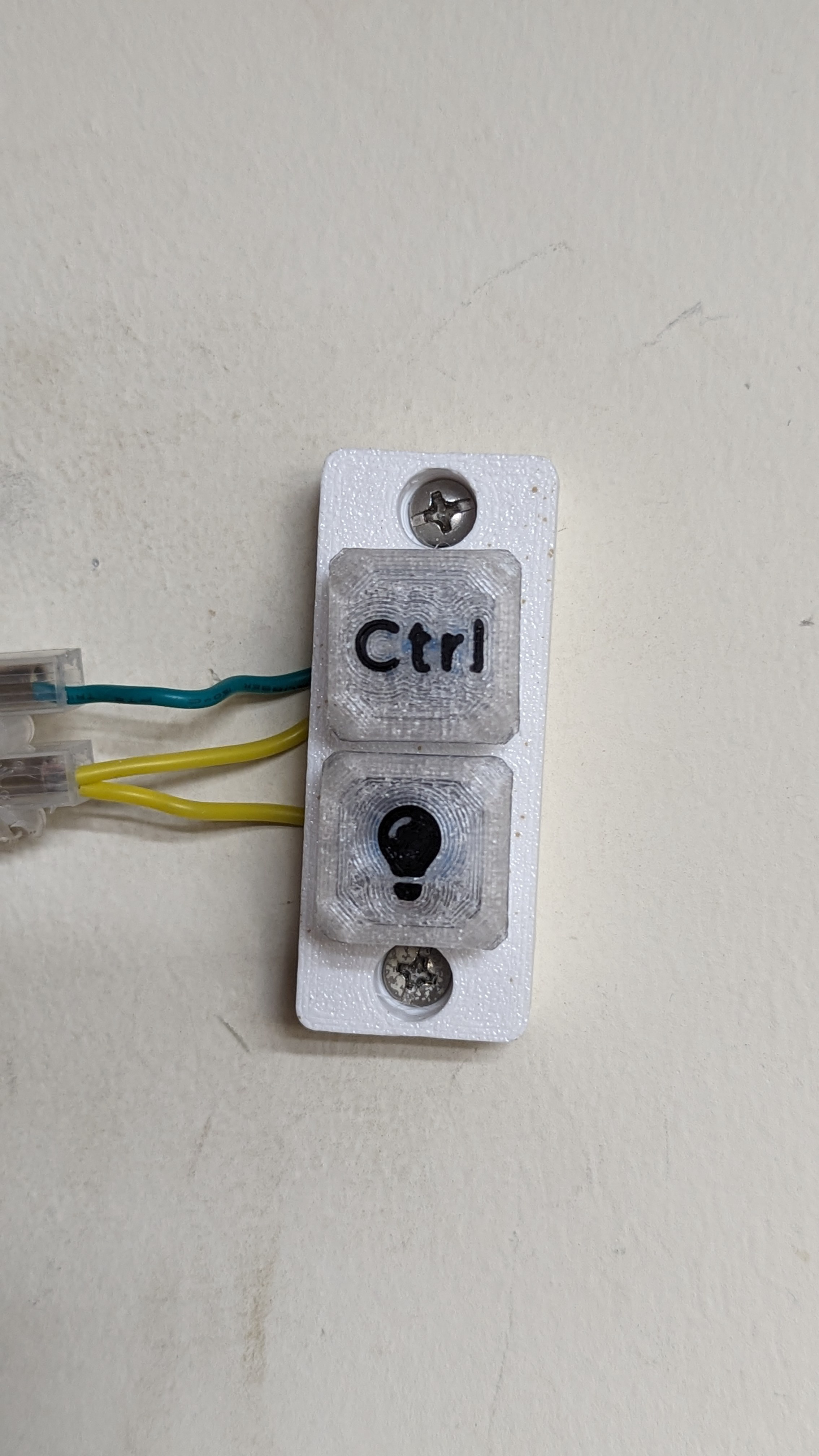
For pair programming it works well with Vigor 👍