Also I had past them up on recentish purchases since they only really controlled the highest end of the market which I don’t have the budget for. So honestly I have no intention of welcoming them back unless there is literally no other option. You made your bed.
This is still a pain point for me. I have been looking for a laptop with an AMD GPU for years to use with Linux, but System76, Starlabs, framework, etc insist on only having Nvidia as a discreet option. Or is it that AMD does not have laptop GPUs? Could be.
This is not an advertisement, but have you checked laptopwithlinux (dot) com?
They’re based in Europe and I’m pretty sure they offer laptops with AMD GPUs, if integrated ones count. Not sure if it’s the highest end stuff, might not have VRAM, but there are definitely AMD laptop GPUs
Oh, yeah I don’t know if they carry those. It’s harder to fit one in a laptop case, so I only see them in specialized gaming laptops, and unfortunately most gaming laptops on the market seem to use nvidia.
Maybe them ceasing to produce consumer products will open a niche that others might fill. Time will tell.
I get the disdain for GenAI, but are AI chips really the problem? Maybe they’re more expensive and price people out, but it’s not like they’re built on plagiarism like most generative AI models.
As far as I’m aware, they’re just capable of running highly complex multivariable calculi in parallel, making them more efficient for AI applications, but wouldn’t the same features make them better for more realistic physics and other game mechanics like procedural generation, NPC pathfinding and behaviors, etc.?
I guess it would suck for anyone who doesn’t have the hardware to play a game, but there could always be options to configure in the settings to make it playable, like “don’t use tensor calculus in game physics” or whatever
Vectors, tensors, and matrices. Not all AI chips are GPUs though, there are currently NPUs in development and the next generation of consumer chips might have them integrated in the CPU.
They’re not good for deterministic equations, like gravity, collisions, or pathfinding, but they could advance other aspects of games like procedural generations, fluid dynamics, NPC dynamic personalities and emergent behaviors.
Some things are still better left to the CPU or GPU, but offloading some tasks to the NPU might allow for more complexity like simulating full weather systems with Parametric Partial Differential Equations
I’m speculating, of course. But playing a game inside a fully-simulated physics engine seems like it could be cool (despite being resource-intensive in current hardware)


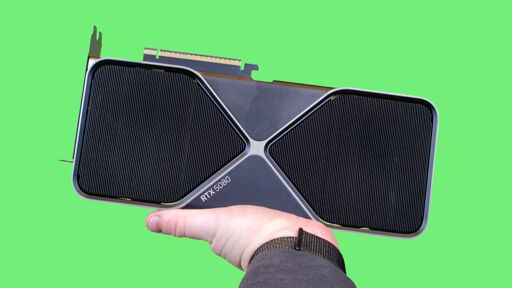
Someone is going to make bank by catering to consumers. Will the market accept nvidia back with open arms if/when the ai investments fall through?
Well what do most victims of exploitation and abuse do?
Visiting Stockholm?
I hear it’s nice
Most people are willing to sell their morals. When nvidia comes crawling back it will be like nothing ever happened.
As a Linux gamer, nvidia was already on thin ice.
Also I had past them up on recentish purchases since they only really controlled the highest end of the market which I don’t have the budget for. So honestly I have no intention of welcoming them back unless there is literally no other option. You made your bed.
This is still a pain point for me. I have been looking for a laptop with an AMD GPU for years to use with Linux, but System76, Starlabs, framework, etc insist on only having Nvidia as a discreet option. Or is it that AMD does not have laptop GPUs? Could be.
This is not an advertisement, but have you checked laptopwithlinux (dot) com?
They’re based in Europe and I’m pretty sure they offer laptops with AMD GPUs, if integrated ones count. Not sure if it’s the highest end stuff, might not have VRAM, but there are definitely AMD laptop GPUs
Thanks. I’ll check them out. But I was actually referring to discreet GPUs. I think I’ve never seen an AMD laptop GPU before.
Oh, yeah I don’t know if they carry those. It’s harder to fit one in a laptop case, so I only see them in specialized gaming laptops, and unfortunately most gaming laptops on the market seem to use nvidia.
Maybe them ceasing to produce consumer products will open a niche that others might fill. Time will tell.
Framework used to make laptops with a dedicated AMD GPU, but I haven’t looked in over a year.
Intel, here’s your big chance!
I hope they don’t have the production of non-ai chips then.
I get the disdain for GenAI, but are AI chips really the problem? Maybe they’re more expensive and price people out, but it’s not like they’re built on plagiarism like most generative AI models.
As far as I’m aware, they’re just capable of running highly complex multivariable calculi in parallel, making them more efficient for AI applications, but wouldn’t the same features make them better for more realistic physics and other game mechanics like procedural generation, NPC pathfinding and behaviors, etc.?
I guess it would suck for anyone who doesn’t have the hardware to play a game, but there could always be options to configure in the settings to make it playable, like “don’t use tensor calculus in game physics” or whatever
Far as i know, GPUs are more specialized on vector calculations. Some upscaling/frame generation techniques use AI hardware but that’s it.
Vectors, tensors, and matrices. Not all AI chips are GPUs though, there are currently NPUs in development and the next generation of consumer chips might have them integrated in the CPU.
They’re not good for deterministic equations, like gravity, collisions, or pathfinding, but they could advance other aspects of games like procedural generations, fluid dynamics, NPC dynamic personalities and emergent behaviors.
Some things are still better left to the CPU or GPU, but offloading some tasks to the NPU might allow for more complexity like simulating full weather systems with Parametric Partial Differential Equations
I’m speculating, of course. But playing a game inside a fully-simulated physics engine seems like it could be cool (despite being resource-intensive in current hardware)