

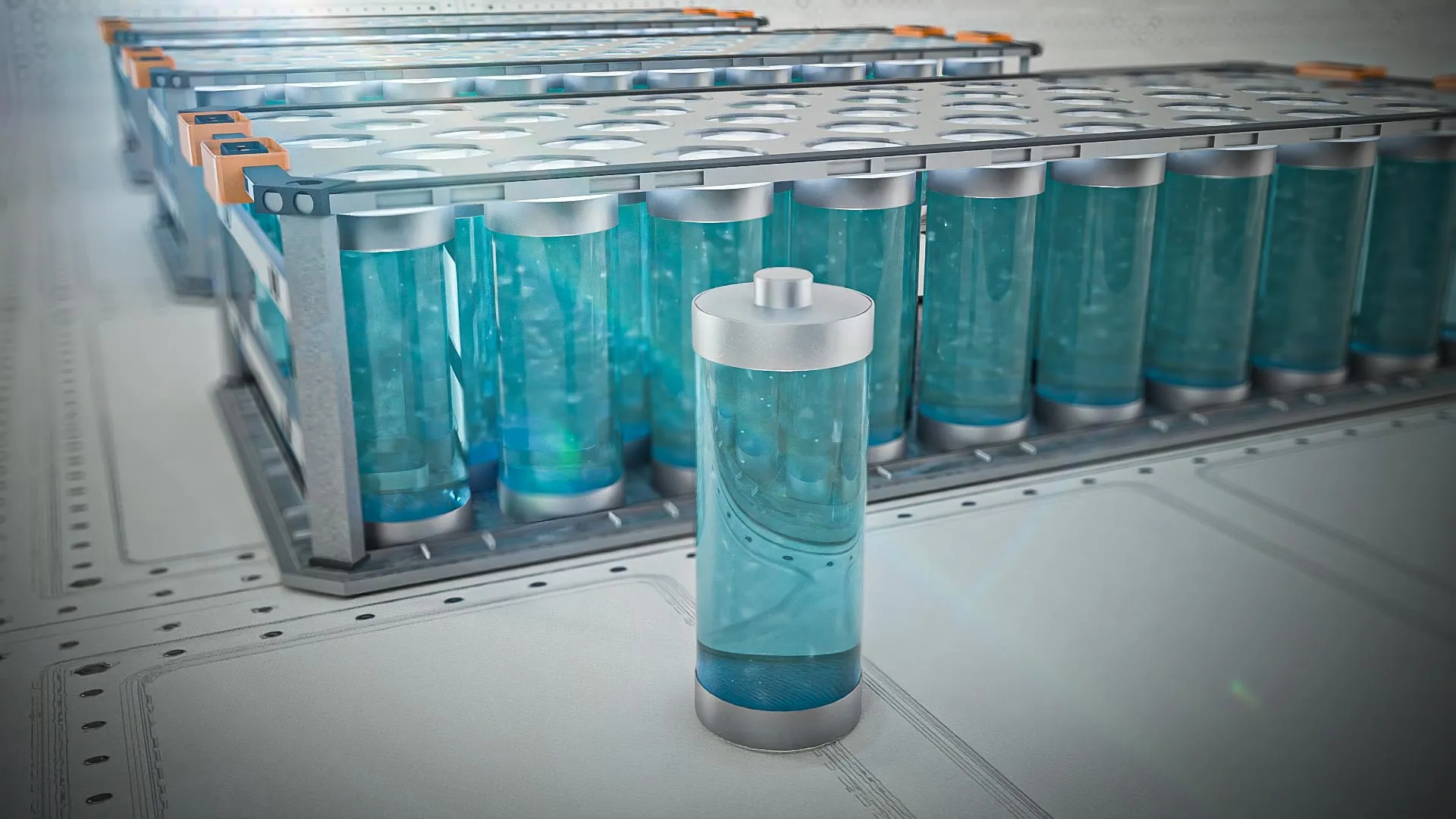
Desalinating water might be the best part. Usually, solar power has the downside of needing storage and desalination has the downside of big energy requirements. If you can do both at the same time, it’s a big win for dry climates with lots of sun
There is also the issue with the salt by itself in desalinisation. If it’s removed with water, you have to deal with that stuff. Table salt is really cheap and there is plenty of offer, so you can’t really economically clean it enough and package it for human consumption or industrial use. So what usually happens is that they dump it back at one moment or another. And that is a hard pollution, and can lead to dead zones around the desalinisation plants if not managed well enough. Being able to add it in a high demand product such as batteries takes all those hurdles away
Make it into bricks and build a pyramid somewhere really dry?
I need a shit ton of salt in winter for my road. But for how long?
Ever wondered what the salt does after melting?
Same issue.I use salt as a a weed killer in some specific area. So I guess I know, at least a little bit
Could the excess sodium used for carbon sequestration? Sodium bicarbonate is baking soda but I don’t know what it could be used for aside from baking or if the energy to capture that carbon would even be a net positive.
and boats.
I can’t imagine it’s doing this at a rate that will make a big impact on water supply, I suspect this is one of those things they throw in just to have a good headline.
Water supply where? In Saudi Arabia it could be revolutionary tech when combined with solar
Not, for example, if it’s only producing 1l/day.
But you can’t imagine it doing a lot more?
I don’t think batteries will soak up that much salt for their use. And I’d imagine they saturate over time. It’s very different than something built specifically for deslination.
Each battery won’t, but a factory making lots of batteries…
Maybe. If it was a compelling case I’d think they’d show us the data.
Every week with the “miracle battery!” headlines. This has been going on for ages and I’m sick of it.
Sodium-ion batteries are not hype though, they are in production use in multiple industries already. They are generally superior to Lithium based batteries in all regards, with the exception of having a bit lower energy density. An equivalent LiFePO4 battery might be 70-80% of the size for the same storage. It’s not a big deal for large applications like cars and solar storage.
Cool.
If they have a bit lower energy density than Lithium batteries, then where does the claim that they store twice the energy come from?
Twice the energy than the previous sodium battery tech. Nowhere does it say its twice as good as Li-ion. That’s an assumption you made.
Sounds like it came from that article about the new kind of sodium batteries with vanadium that are doing that desalination business. I was describing the general technology rather than that specific new one in the article.
Right up there with “cause/cure for dementia found”
“Dyslexia for cure found!”
350 page study concludes some people spend too much time reading.
We found the cure for Alzheimer’s but can’t remember what it was. I think it began with a “c”. Who are you?
Tuesday.
It’s time for your nap, Mr President.
cure for dementia found"
The US government could use some of that these days.


That face is glorious. My mood has skyrocketed.
Sodium Ion already does 5000+ cycles. Adding Vanadium is not a scalable material. It is very expensive. 400 cycles steady is not useful information because it needs to do much more. They didn’t state a wh/kg density. This is probably not a viable research vector, but “big Vanadium” has proposed a rental model to make Vanadium more scarce for other applications. Flow batteries (a fuel cell with tanks of electrolytes) provides an ultra easy way of recycling/selling the vanadium for traditional uses. Battery rental that forces returning it could be viable.
Right up there with the batteries that would contain about 1 kg of silver in them. Even if they didn’t become insanely expensive you’d have tweakers foaming at the mouth to steal your batteries.
Sodium Ion is a real game changer. But I doubt it will compete with Lithium Ion on energy density anytime soon.
But that’s not necessary to make major changes in the power grid. Solar and wind is already cheapest form of energy generation even considering the expense of Lithium to store the energy when renewables aren’t generating. If you’re just installing stationary battery banks, you don’t care that much about the energy density as you would for a battery in a car or phone. Set up banks of cheap sodium ion batteries strategically and not only do you have plenty of power stored for when it’s not sunny or windy, you may avoid widespread power outages when power lines are downed.
Sodium ion has the same “energy density”, but lower density because of its honeycomb structure.
This story is actually about a sodium-vanadium wet battery, not sodium ion. NaVn batteries are a wet flow battery that have been around for a while, they are intended for stationary power use.
i’ll take 10 please.
Bullshit headline. It neither desalinates water nor it’s better than Li-ion, because you know physics is pretty hard to cheat
you use grid power, not a miracle
Doesnt matter if the capacity is even less than sodium batteries.
We’ll see.
What do they do with the Chlorine though?
They run a pool service
🤨 Is this a reference to what I think it’s a reference to?
TNT has 1162 Wh/kg ratio.
These new lithium-ion batteries get to 300-400Wh/kg range.
We are hitting the limit what is doable with energy density. Do you really want to carry 100g of TNT in your pocket or few tons of TNT in vehicle going 100km/h.
Of course things are not directly comparable, but ball parks.
i’d say stability is more important than energy density
like gasoline has more than 10x the energy density than tnt and we’re perfectly fine with many kg of that on a vehicle going 100km/h
a fully fueled vehicle is the equivalent of ~600kg of TNT, but it’s very stable whilst TNT is not
That is true, but my small EV the batteries are 500kg, same car with combustion engine only has 40L fuel tank.
Stability is important, but lithium-ion ain’t really that stable either. Still waiting some solid state to get made.
Lithium Iron Phosphate (LiFe-PO) are actually really stable. Way less likely to catch fire in thermal runaway and don’t lose capacity as easily.
They just aren’t very energy dense, so you need more weight per wh. They also operate at a lower voltage per cell which means they charge slower.
They are used in short to med range EVs already, but the lower capacity makes it impractical to put enough for longer range EVs.
As an aside, I would argue that for the majority of people a large capacity EV battery is a bit of a waste. Mine is ~70Kwh, give or take. In optimal conditions my car estimates 240-250mi at 100%. Over the winter it’s showing anywhere from 140-180mi at 80%.
I moved cross country right after getting it and drove it 1000 miles. It took a bit longer, than it would in a gas car, but it was doable. Just have to plan segments to get to the next charger and try to charge to 100% with level 2 charging (240v AC) if you can when you stop for the night.
Sodium ion is generally much more stable.
Yeah, lithium ion is a good stopgap while we develop better options, but it’s by no means stable. Get them too hot or puncture a cell and you’re going to have a bad time.
Yeah but firewood is like 5 kwh/kg, or 4 times the energy density of TNT. We drive around with wood in our cars all the time.
TNT has 1162 Wh/kg ratio.
How do you recharge TNT?
We are hitting the limit what is doable with energy density.
I mean, we’re definitely running into a problem of how you build a battery without also building a bomb. But the entire point of TNT is rapid thermal expansion. The point of a battery is very low voltage steady release of electrical charge.
I might also note that C4 has around 6 Mwh/kg. A bit of applied chemistry can go a long way to improving energy efficiency. And that’s before you take advantage of geometry to focus pressure, via a shaped charge.
Point being, there’s a lot of clever ways to juice a lemon. We’re a long way from the end of the road on battery improvement.
Kinda, yes? Phones already do so much, why not one additional feature to deter theft.
We’ve got a lot of that going around in the USA right now.
deleted by creator
I think the real breakthrough will come when we will be able to make powerful microbatteries.
I think there were some nuclear button
1W0.1mWdecade-long50-year batteries, from China if I recall