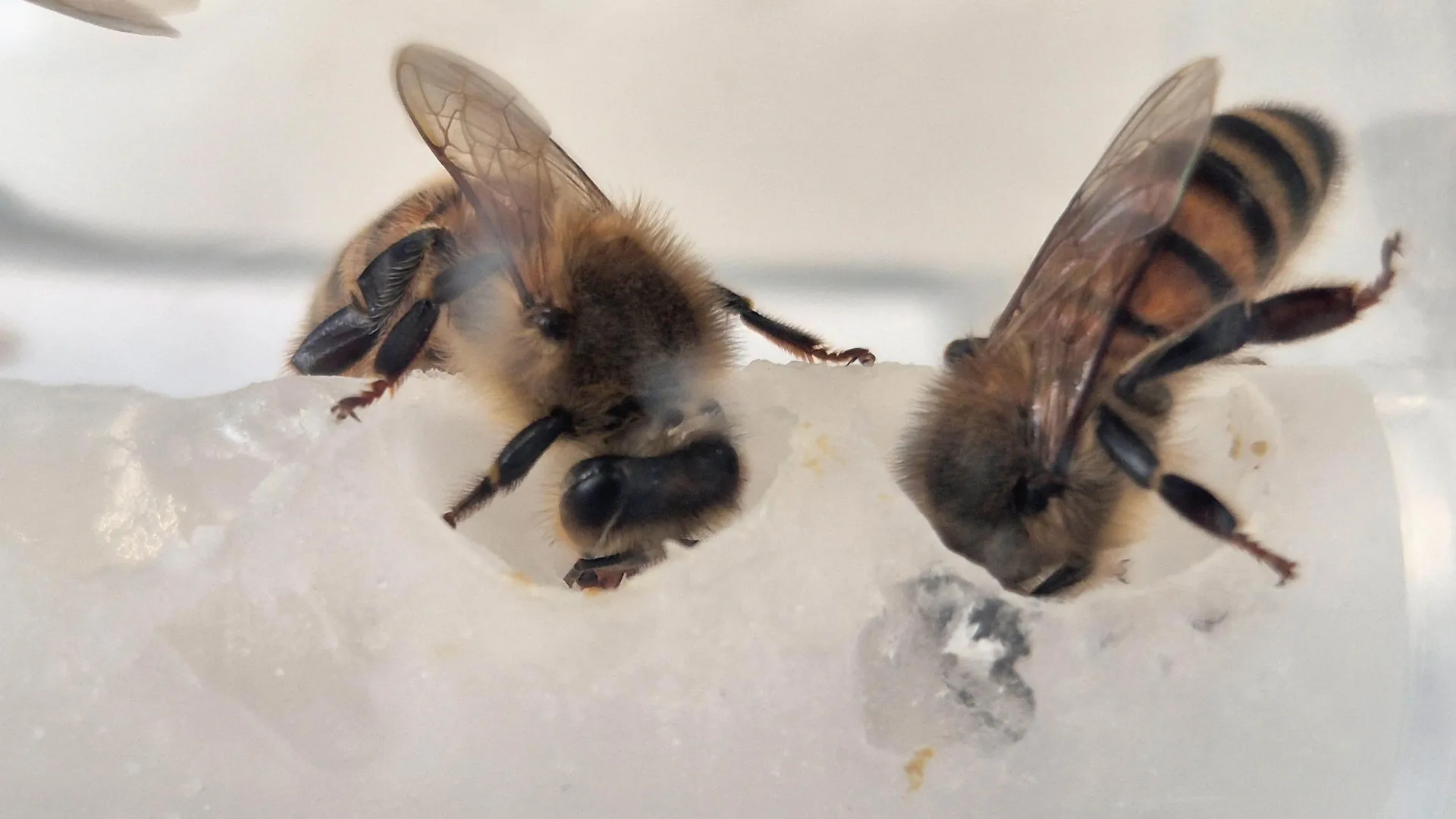
Scientists have developed a breakthrough “superfood” for honeybees by engineering yeast to produce the essential nutrients normally found in pollen. In controlled trials, colonies fed this specially designed diet produced up to 15 times more young, showing a dramatic boost in reproduction and overall health. As climate change and modern agriculture reduce the availability of natural pollen, this innovation could offer a practical way to support struggling bee populations.


The solution is so simple. Crop/pollen diversity. Instead of letting fields lay fallow for crop rotation, they could plant diverse wildflower meadows to improve quality of bee health for the traveling bees that get shipped around for crop rotation. Or the bee keepers themselves that sell the services of their bees, could ensure diverse flower and pollen options when their bees aren’t traveling.
I can see a potential problem with this suggestion. How many of those wildflowers are net nitrogen fixers? If they are net-negative this approach could be draining all the nitrogen out of the soil during off-rotation years meaning large amounts of petrochemical fertilizer would have to be used to make the field productive again for nitrogen consuming crops (like wheat and corn).
Key Native Nitrogen-Fixing Wildflowers:
https://edgeofthewoodsnursery.com/wp-content/uploads/Native-Plants-for-Nitrogen-Fixation.pdf
Cheers
Several of those are going to be perennial and end up competing with mono-culture crops the following year(s) (not that I’m trying to defend mono-culture crops, but that’s what they’re planting). It’s a good idea, but not necessarily as simple as you’re implying. Still it’s an idea that’s not without some merit. The biggest obstacle to adoption is no one is making a significant profit off of it, so it’s unlikely to see much uptake.
You aren’t wrong, but soil can be turned over, and the wildflowers can be removed.
What about the seeds they dropped the year prior
I don’t mean to argue against flowers, but why specifically Pennsylvania? What about everywhere else?
I’m sure things are different in different parts of the world, but where I’m from, pretty much none of the big crop farms let fields lay truly fallow. Most of them plant various cold season cover crops that include things like clover, brassicas, and legumes like vetch. Those all produce lots of flowers that feed the bees in the off season.
The issue with wildflower meadows, and correct me if I’m wrong, is that most of those wildflowers bloom at times when the fields would otherwise be needed for crop production. Of course, there are farmers who skip planting at all some years, but in my neck of the woods, nobody does that. They plant every year, at least once, they just rotate different crops in and out. Corn one year. Hay then soy, the next. And so on.
Bee extinction means no polination, no polination means no crops; penny wise and pound foolish.
Bee extinction means drastically fewer crops and less pollination, but not no crops. It would be devastating, but there would still be agriculture. Lots of staple crops are wind pollinated and don’t rely on insects at all. But for the rest of our food, that would all become very expensive and widely unavailable.
I learned during COVID about planting diverse local wildflowers to help with pollination in my small little garden I used to have. I ended up dedicating like an 8x6 planter just for wildflowers every year. Always had tons of bees, hummingbirds, and butterflies. I honestly never realized how many species of bees there were. The first year I did it I tripled my veggie yield, never looked back.
True but at the same time bees help spread pollinating plants - it’s a two way relationship. They may be commercialised for crops, but they will go to any plants in range and contribute to their spread.
So a method of increasing bee populations may also be helpful in spreading wildflowers and speeding up rewilding efforts.
In addition dramatically increasing bee populations may help resolve issues with pollination such as in some regions of China where damage is so bad that hand pollination is needed for crops. Restoring bee pollinators in those areas may increase crop yields, which in turn reduces the general pressure globally on expanding the use of fertile land for farming.
So while crop/pollen diversity is certainly very important, this kind of research still has potentially big benefits for the environment both in the fight to rewild and slow the spread of land use being moved to farming.
Works for me. I only mow early spring and early autumn. During spring and summer the yard runs on it’s own. Every year is different. Each year it looks different. Every year honey tast little different. But … that is how it’s supposed to be!
“brands” hate that, taste must be 100% predictable year to year. Just like wine. Grapes are different each year too. Imagine the amount of additives required to adjust (read that as ruin) the original flavor.
nah man. bees just crave brawndo.
Don’t worry. Dust bowl 2 comming in hot to teach this lesson the hard way.