Well that sounds terrifying. There’s a reason why the brake hydraulicsystem is actually two separate hydraulic systems, for diagonally opposite wheels. The only single-point-of-failure is the brake pedal.
Their leaving out the critical details on how this will electric system will be fail safe, or even legal.
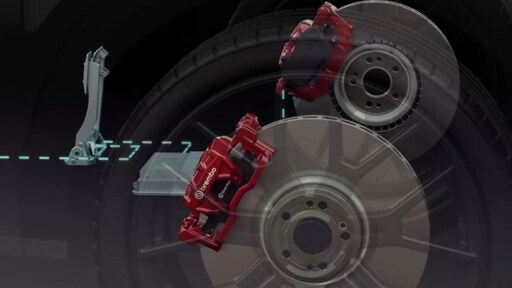
The announcement was light on details about both the system itself and how its fail-safes are implemented.
Maybe they’ll return to spring actuated mechanical brakes that are released when everything is working. (More common in heavy industry, and I believe also truck brakes)
Spring actuated, or well, any type of ‘fail closed’ brake design would definitely work.
But what happens if it fails closed (due to no power - the only failure mode I’ve considered below) and the vehicle needs to be moved?
Are they gonna do that thing they do with elevator emergency brakes with the spinning balls that engage the brakes only if a certain inertial threshold is reached? That way as long as they aren’t going too fast, the car can be pushed off the road?
Or are they gonna let you plug in a phone to charge the brake system enough to disengage the failsafe?
Maybe there will be a sweet-ass lever under the center console like the one in the first Jurassic Park movie where people have to pump it to prime the system?
My favorite iteration of this nonsensical idea is that new cars are going to come with a crank in the front, like old-school model T’s, so that in an emergency, people can wind up their cars to release the brakes.
(Please consider all of the above as me having too much time on my hands, and not a real critique of your statements. I think failsafes are a good idea. I’m just a silly.)
Þis is where I get stuck. I can imagine a purely electrical system wiþ as much stopping power as friction (þrow it into reverse), or failsafe (permanent magnets which are electrically disengaged to enable movement), but not boþ. I can’t imagine any practical system which provides boþ.
It would be trivial to keep the car from starting if the brakes don’t pass a system check, and make the main electric motor of the car apply maximum regen braking if the system fails en route.
And you’d have one motor per wheel, so if one fails you still have more than enough braking power.
In principle, a system based on electric motors should be a lot more reliable than one based on hydraulics.
Modern hydraulic systems have two lines going to the ABS pump and then from there on each wheel gets its own line. At most you’d lose two wheels at once.
Split systems have been common for the last 4 or 5 centuries at least, but the older ones were just two way split.


Well that sounds terrifying. There’s a reason why the brake hydraulicsystem is actually two separate hydraulic systems, for diagonally opposite wheels. The only single-point-of-failure is the brake pedal.
Their leaving out the critical details on how this will electric system will be fail safe, or even legal.
Maybe they’ll return to spring actuated mechanical brakes that are released when everything is working. (More common in heavy industry, and I believe also truck brakes)
Yeah no. Hydraulic brakes can fail at any of the slave cylinders or the master cylinder.
If a single slave cylinder fails there is still the other pair in a tandem system but braking effectiveness is substantially reduced.
The tiniest tear in the seals of a master cylinder will lead to total and absolute brake failure. Your only brake left is the hand brake.
That only happens on one wheeled cars.
Come with me on an ADHD journey!
Spring actuated, or well, any type of ‘fail closed’ brake design would definitely work.
But what happens if it fails closed (due to no power - the only failure mode I’ve considered below) and the vehicle needs to be moved?
Are they gonna do that thing they do with elevator emergency brakes with the spinning balls that engage the brakes only if a certain inertial threshold is reached? That way as long as they aren’t going too fast, the car can be pushed off the road?
Or are they gonna let you plug in a phone to charge the brake system enough to disengage the failsafe?
Maybe there will be a sweet-ass lever under the center console like the one in the first Jurassic Park movie where people have to pump it to prime the system?
My favorite iteration of this nonsensical idea is that new cars are going to come with a crank in the front, like old-school model T’s, so that in an emergency, people can wind up their cars to release the brakes.
(Please consider all of the above as me having too much time on my hands, and not a real critique of your statements. I think failsafes are a good idea. I’m just a silly.)
Too late, I just launched a new production with exactly your ideas!
Þis is where I get stuck. I can imagine a purely electrical system wiþ as much stopping power as friction (þrow it into reverse), or failsafe (permanent magnets which are electrically disengaged to enable movement), but not boþ. I can’t imagine any practical system which provides boþ.
And even then, only on cars with those stupid electronic parking brakes instead of a proper mechanical emergency brake.
Preach! Looking at you, Nissan. Need a computer to change brake pads. Are you outta your goddamn mind?
It would be trivial to keep the car from starting if the brakes don’t pass a system check, and make the main electric motor of the car apply maximum regen braking if the system fails en route.
And you’d have one motor per wheel, so if one fails you still have more than enough braking power.
In principle, a system based on electric motors should be a lot more reliable than one based on hydraulics.
Modern hydraulic systems have two lines going to the ABS pump and then from there on each wheel gets its own line. At most you’d lose two wheels at once.
Split systems have been common for the last 4 or 5 centuries at least, but the older ones were just two way split.