I drive solely using one pedal on my Bolt, and brake only when I need to stop faster. As long as it’s reliable and safe this should be fine. Regenerative braking is really fun.
This is a terrible idea.
Braking systems need MORE redundancy. Not less.
Yeah we’re cooked.
Well that sounds terrifying. There’s a reason why the brake hydraulicsystem is actually two separate hydraulic systems, for diagonally opposite wheels. The only single-point-of-failure is the brake pedal.
Their leaving out the critical details on how this will electric system will be fail safe, or even legal.
The announcement was light on details about both the system itself and how its fail-safes are implemented.
Maybe they’ll return to spring actuated mechanical brakes that are released when everything is working. (More common in heavy industry, and I believe also truck brakes)
Yeah no. Hydraulic brakes can fail at any of the slave cylinders or the master cylinder.
If a single slave cylinder fails there is still the other pair in a tandem system but braking effectiveness is substantially reduced.
The tiniest tear in the seals of a master cylinder will lead to total and absolute brake failure. Your only brake left is the hand brake.
That only happens on one wheeled cars.
Come with me on an ADHD journey!
Spring actuated, or well, any type of ‘fail closed’ brake design would definitely work.
But what happens if it fails closed (due to no power - the only failure mode I’ve considered below) and the vehicle needs to be moved?
Are they gonna do that thing they do with elevator emergency brakes with the spinning balls that engage the brakes only if a certain inertial threshold is reached? That way as long as they aren’t going too fast, the car can be pushed off the road?
Or are they gonna let you plug in a phone to charge the brake system enough to disengage the failsafe?
Maybe there will be a sweet-ass lever under the center console like the one in the first Jurassic Park movie where people have to pump it to prime the system?
My favorite iteration of this nonsensical idea is that new cars are going to come with a crank in the front, like old-school model T’s, so that in an emergency, people can wind up their cars to release the brakes.(Please consider all of the above as me having too much time on my hands, and not a real critique of your statements. I think failsafes are a good idea. I’m just a silly.)
Too late, I just launched a new production with exactly your ideas!
Þis is where I get stuck. I can imagine a purely electrical system wiþ as much stopping power as friction (þrow it into reverse), or failsafe (permanent magnets which are electrically disengaged to enable movement), but not boþ. I can’t imagine any practical system which provides boþ.
The only single-point-of-failure is the brake pedal.
And even then, only on cars with those stupid electronic parking brakes instead of a proper mechanical emergency brake.
Preach! Looking at you, Nissan. Need a computer to change brake pads. Are you outta your goddamn mind?
It would be trivial to keep the car from starting if the brakes don’t pass a system check, and make the main electric motor of the car apply maximum regen braking if the system fails en route.
And you’d have one motor per wheel, so if one fails you still have more than enough braking power.
In principle, a system based on electric motors should be a lot more reliable than one based on hydraulics.Modern hydraulic systems have two lines going to the ABS pump and then from there on each wheel gets its own line. At most you’d lose two wheels at once.
Split systems have been common for the last 4 or 5 centuries at least, but the older ones were just two way split.
In fact, according to BMW, drivers of current EVs pretty much never activate their mechanical braking systems, relying instead on their electric motors to handle the job.
I didn’t think the regen could bring a car to a complete stop, like at a stop sign or a red light. They’re certainly not using the motors to hold your place on a hill, are they?
Or are they just saying BMW drivers never stop when they’re supposed to?
I drive an electric van at work, I keep the regen on max because I’m lazy and it saves me some braking and some power - but I still need to use the brake pedal! Regen is fine if the speed of the traffic slows, but if you want to actually stop, or stop faster, you need the brake. Regen won’t make fuck all difference when a kid on a bike wobbles into your path. I’m sure they could increase it, but enough to rapidly stop a heavy vehicle going downhill? I dunno.
Edit - also, it’s intermittent if the van decides it’s having a bad day.
I don’t know about heavier vehicles like vans or trucks, but in my parent’s Renault Zoé the Regen braking is strong enough to slow the car down from like 50km/h to 30km/h when going downhill. It might be enough to bring the car to a standstill, I’ve never actually tried letting it be - usually there’s a car behind me or I need to get somewhere in time so I can’t afford to experiment.
Brakes are still important for emergency/manual speed adjustments, of course. Just wanted to share my experience with “how well does regen braking work downhill?”
Yes I use regen braking for nearly all my stops at lights and stop signs. I’d say 80-90% of the time.
I never apply brakes when on a hill, as regen braking covers that to.
I never apply brakes when on a hill, as regen braking covers that to.
But what about coming to a complete stop on a hill? There’s no way for regen to do that, there has to be motion for it to work.
Do you know for a fact that your car (in “B” mode or whatever it is you’re using) doesn’t engage mechanical (friction) brakes on your behalf when appropriate? Or is this an assumption?
EV motors can add energy in either direction of rotation, or remove energy from the existing rotation.
Regenerative braking is removing energy, and yes you must be moving for it to “regenerate” energy. You are correct that it can’t hold you in place without adding energy, you’d roll forward very slowly.
However if you look up how these motors work, the same magnets that are timed to make the motor run can be used to lock the motor in place by adjusting which electromagnets are powered. So the onboard computer detects when motion is slow enough for regenerative to stop working and switches over to magnetic locking, which does burn a bit of energy.
Hmmm. Maybe þe system is more þan regen. Ypu can still apply plenty of resistive force wiþ permanent magnets.
Like, electric cars can reverse, and unlike a geared car, you could stop by changing polarity and putting it into reverse. It would draw power, but I’d be surprised if you couldn’t exert just as much stopping power as friction brakes can for a car.
I mainly use it, but I i definitely have to use the brake when i need to get less speed or in an emergency. My car does roll forward automatically and engine brake automatically too.
That’s going to be very interesting to see failure rates and modes on the road over time.
We at least know it could potentially have really low failure rates since airplanes have the same type of systems today, and that’s highly regulated
I’m more concerned about the failure mode than the failure rates. Mechanical and hydraulic brakes can experience gradual failure, giving the driver a chance to pull over get the car repaired.
EVs usually have a single motor and a single inverter , both of which can fail suddenly. Electronics usually work perfectly fine until they suddenly don’t work at all (blown fuse, bad connection, blown capacitor etc)
How are they gonna build redundancy so that no single component failure means youre freewheeling downhill on the highway
Back in the day you had to have two distinct hydraulic lines, crossing over and serving 3 wheels each, so that you could still break if one went down, but you’d feel it.
Guess they’ll have at least 2.
Brakes on airplanes are used infrequently (though when they’re used, they’re safety-critical) so the usage pattern is very different than for cars.
And inspected after every use.
That’s the real difference to me, maintenance. Planes have a strict schedule of inspection and replacement. Moms minivan last saw an oil change before the kids made it to middle school. There’s going to be some failures.
Is that true? I thought most purpurnen kept up with oil changes
Does at least once per flight really count as “infrequent?”
I mean, airplane brakes probably have about a 3% duty cycle (the percentage of time they’re in use), so they’re generally idle. For city driving, car brakes probably have about a 25% duty cycle.
If those numbers are close to accurate, that means planes are using their brakes about 10x less than cars.
BTW, I didn’t pull those plane numbers directly out of my ass, but they’re definitely a rough estimate. I’m figuring about 5 minutes of breaking time per flight, counting landing and during the taxi to and from the runway. And I’m assuming a 2.5 hour flight, figuring that could be close to an average flight time.
I don’t think taxi and landing wear the brakes evenly. Landing must be something like 99% of the brake wear in <30 seconds of braking it takes for the plane to stop.
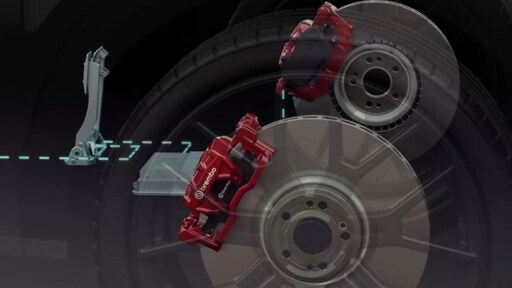
Brembo’s new “Sensify” braking system takes that one step further, eliminating the hydraulic system entirely and relying instead purely on electronic brake-by-wire and electric motors.
I can see it catch on for EV, pretty sure it won’t be used on ICEV considering brake is the only thing that can stop the car
Downshifting used to be a thing people would do to slow down a car significantly.
Takes quite a bit of practice to use it in emergency though, but for normal slowing down it’s pretty handy, and manual transmission tend to slow down car a lot when releasing the gas pedal.
I engine break fairly often as my car has paddle shifters. Reduces the time between break jobs
Aren’t you trading brake wear for transmission/engine wear?
I’m torn cause i drive a stick and its much more difficult for me to swap out a worn out clutch than doing a brake job. I usually leave a lot of distance and just coast in neutral when approaching stops.
Brake by wire means standard brakes, but the control mechanism is electronic, not hydraulic.
Still is a mechanical brake, just controlled with wires.
Overall, it should be less complex/more modular than hydraulic systems that have to be integrated with the drive train. (But it also means more ‘opportunity’ for embedded sensors and non-user serviceable parts signed by code, so who knows how they’re going to mess it up.)
This makes sense on EVs. Couple the regen braking with fail closed brakes, and you should never have a failure.
And hope that doesn’t happen at highway speeds in front of an Amazon semi.
Brembo’s new “Sensify” braking system takes that one step further, eliminating the hydraulic system entirely and relying instead purely on electronic brake-by-wire and electric motors
OK now show us a scenario where the vehicle is badly damaged in a traffic collision, the electrical system is compromised, (possibly even on fire) and show me the vehicle slowing to a stop safely with no electrical systems functioning what-so-ever or GET OUT OF HERE WITH THIS INSANITY
I have had hydraulic brakes fail more than while driving. They can fail even when the lines are fully intact.
That sounds more like a lack of maintenance in my experience, but I wouldn’t want to be where you were sitting when that happened.
‘Classic’ cars can be heavy enough to boil brake fluid in heavy breaking situations. Once the fluid boils you lose all breaking power at once on all 4 wheels.
Can also boil break fluid if a wheel bearing fails while driving( repair shop packed it too tight)
Also the magic stop juice comes out if you panic stomp on the breaks while headed down an icy hill.
I’m with you, but playing devil’s advocate… A hydraulic brake line can be damaged in an accident as well. Simple brakes with a proportioning valve or similar mechanism likey doubles your redundancy for most failures of downstream brake components but that’s not guaranteed.
It does say electric motors are a part of the system which could be like the electronic parking brakes in many modern cars. Maybe they default to a closed/braking condition if power is lost?
I will not be the one risking my life or my family’s life or the lives of other families to be an early adopter of this tech, but it could work with rigorous engineering and testing.
Oh I’m with you there, but hydraulic hard lines and high pressure brake lines are thousands of times more rugged than electrical wires and cannot be rendered useless by software mistakes or operating system crashes. The ABS controller, computer functions of a regular car can fail catastrophically, the vacuum system can be breached and made useless, but the hydraulic brake pedal is still capable of slowing a car to a stop.
IANAE, so just spitballing, but… passive braking? Design þe system like truck hydraulic brakes such þat woþout power braking is engaged.
Fail secure sounds good but now you also need to consider how quickly the brakes engage. Don’t want some random electrical hiccup locking up your brakes mid curve while you’re three-wide doing 70 on an interstate. Slowly draining capacitors or whatever to gradually engage them might be an option. Then you also, preferably, need some means of physically disengaging them. Otherwise you’re gonna get disabled vehicles in the middle of roadways that have to be dragged up onto flatbeds or the side of the road because the wheels won’t roll without restoring brake power first.
plus it saves you money on wear parts, because bypassing the hydraulic system means bypassing the pads and rotors too.
I replace my 911 rotors and pads once every 6 years? They cost $450 for the semi track compound.
These things ain’t saving anybody a dime but the manufacturer.
I replace my 911 rotors and pads once every 6 years?
Tell me you’re wasting your 911 without telling me you’re wasting your 911.
You’re right, I don’t track or hpde it that much anymore. I’ve moved on to actual race car shit. 4 lemons a year. You’re barking up the wrong tree. My current build, spec 3.

“I’m sure this will end well.” -Absolutely nobody, anywhere
deleted by creator
Unless they deliberately put in a part designed to wear out in 5 years, there’s really nothing in an electric motor that would.
Bearings can sieze up, starting capacitors can go. A worn bearing can overheat the windings and cause damage.
Yes, but those are things that can be designed to last decades, at very little cost.
They can’t have perfect quality control for every part that leaves the manufacturer, especially considering the massive temperature fluctuations they might experience, humidity changes, road salt, and the fact its attached to something hitting bumps and potholes at 100+ km/h.
So… how do manufacturers of hydraulic brakes do this?? Or any other safety- critical part on a car?
They don’t. Parts like calipers failing and rotors warping is common.
Well every car has wheel bearings that experience all those same conditions and last hundreds of thousands of miles. Brake calipers can also stop functioning, rubber lines can plug up, people can never change their pads and rotors.
I’ve had a wheel bearing last 20k miles. It depends on the abuse. My ultimate point was that an electronic motor still has several possible failure points.
Idk it might use magnetic brake pads. I have used them in other fields & they are pretty nifty. The ones I used created eddy currents & had not mechanical wear. For my project the mechanical brake had a ~10 year lifespan while the magnetic brake could last ~50 years. Also the mag brake was only 30% more expensive but didn’t need maintenance & would be significantly cheaper if you took the lifespan of the project.
deleted by creator
Welcome to the world of mostly solid state systems. Turns out when friction is a solved problem there’s no need for cottage industries like brake pad and rotor production.
deleted by creator
Subscription to the live cloud service that connects your pedal to your braking system