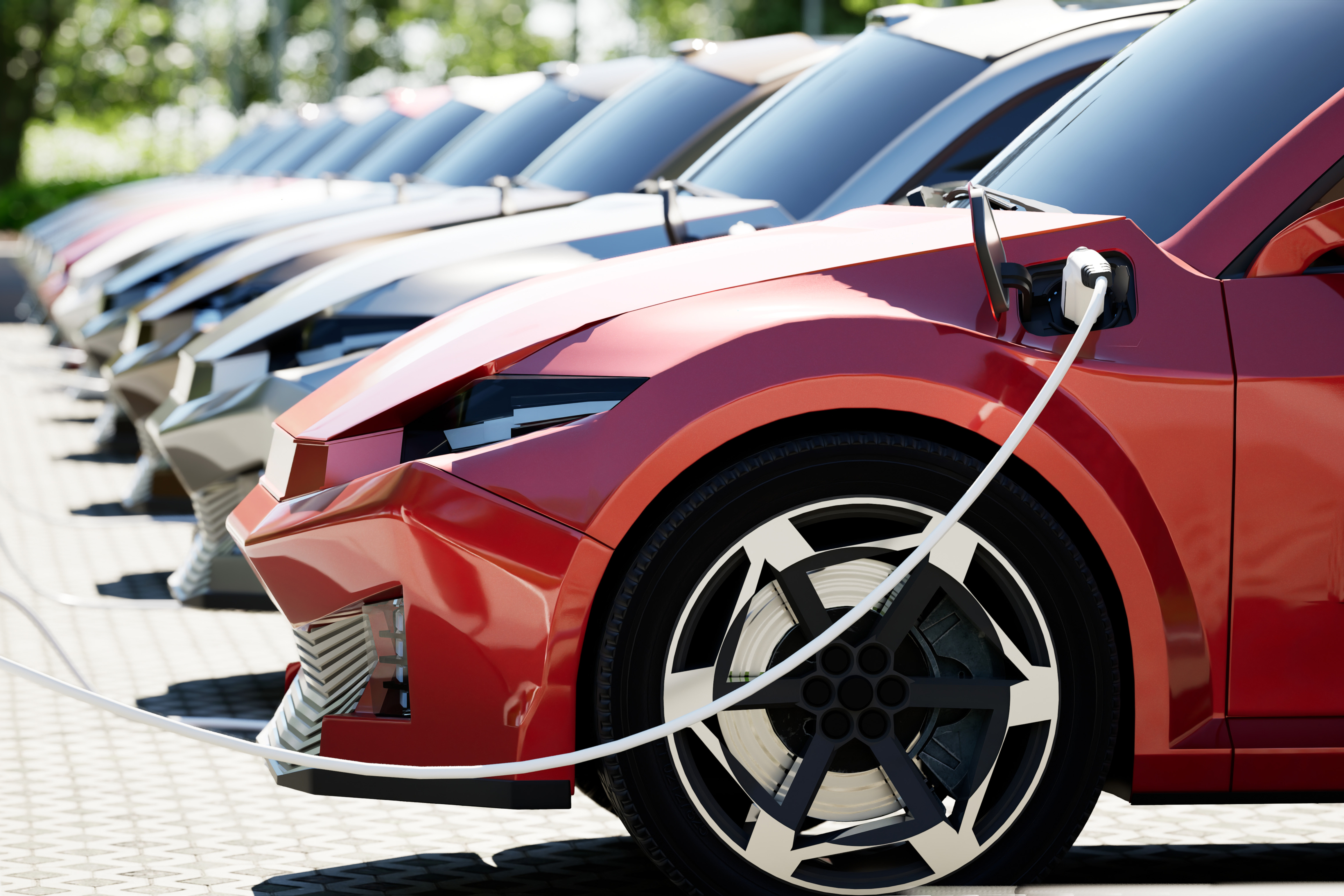
Yup. We knew this. But they won’t let us buy the affordable cars because that sort of free market would put US companies out of business.
In this country, we have the FREEDOM to buy any overpriced domestic or foreign (assuming they’re on the list of good foreign countries) tank-sized SUV you want.
Yeah, you’re living in state capitalism in the USA these days.
I’ve read this happened because sometime in the 80s comrade Reagan decided to own the Japanese instead of letting competition do its work (for cars, but with electronics similar things followed). He’s somehow often associated with liberal capitalism and so on, but the guy believed that “monopolies are efficient”, but at the same time by some magic if a monopoly stops being efficient, then all the capital and technology base for competition to replace it will just materialize in one place in one moment all by themselves. So I’m not even sure if “comrade” is irony. The ironic part is that the US president whose term coincided with Soviet system conclusively losing the Cold War is also the one who supported state capitalism and ideologic pressure in society.
Ronald Reagan Ruined Everything: https://music.youtube.com/watch?v=mSbtBwgSY-s
Yup. We knew this. But they won’t let us buy the affordable cars because that sort of free market would put US companies out of business.
While I mostly agree with you, the Chevy Bolt brand new can be had for $29,990. We really should have the option to buy Chinese EVs since the majority of other US car makers have abandoned the EV segment, and therefore deserve no protection from a market they are not in anymore.
A lot of people don’t realize that the big car thing is due to government regulation. X footprint vehicle must attain Y MPG lest fines or what have you, so manufacturers are legitimately being incentivized to make larger ballooned out vehicles because that puts them in a different bracket for mpg requirements that’s easier to attain. This is why the new 3 series is bigger than the old 5 series, etc
I mean one day we’re complaining about how corporations have shipped manufacturing jobs overseas, and the next day we’re complaining that the government is preventing someone from doing same. Make up your fucking minds.
After 1 year ownership.
Zero maintenance costs this year, plus averaging around 3 to 5 cents per mile.My motorcycle costs more to drive and maintain.
It’s nice knowing that no matter how expensive gas gets, I’m unaffected by it. Power comes from solar.
My 1st EV paid its own note with the amount of gas I wasn’t buying to run it.
Not even a service?
2 recalls, no cost to me. Brakes were serviced during that time free of charge. All they did was clean and check them. Also rotated tires for free.
My biggest expense I would assume will be my tires. It does weigh like 5400 lbs
The engine has one moving part and doesn’t need re-lubrication every year. Makes shit a lot simpler.
Single ratio transmission that need an oil change every couple of years… And change the cabin air filters.
That is the official service schedule on mine. The dealer wants several hundred for that of course. So I use local independent mechanics.
I cannot wait until somebody comes out with a hub drive elec motorcycle with a range of 100 miles or greater. No oil changes, no valve lash adjustments, no chain cleaning and slack adjustments, no Teflon containing chain wax or degreasers, just tires brakes and ride. I personally cannot afford an EV car, but motorcycles have been a great way for me to reduce my carbon footprint, cut my commute cost and have fun while doing it. But if it could be electrified I’d go into debt for it! Over winter I have to drive my Subaru and I spend roughly 40-50 a week on fuel, I’m pressed to spend half that on the bike. Always a relief when summer comes and I can shut down the oil furnace and park the car unless I need the payload area to move a bunch of shit. More and more electric bikes are coming out by the minute we are almost there 🤞
No ear splitting noise either. I’d support that.
Hell yea 🤙 I will say 90+% of the ear splitting noise comes from 2 distinct riders that are NOT the norm, Harley bros and squids. Both those fuckers will take their mufflers clean off because “loud pipes save lives” despite the fact that when they blow by u, u won’t hear so much as a mouse fart u till they have already passed you because their blast pipes are pointing BEHIND the bike blowing noise out the back and away, and in turn offer no warning to drivers in front of them and only serve to annoy those behind. And no cutting the muffler off will not get u more power. These are the same nubs that refuse to use the horn and instead will rev bomb, then grab a fist full of front brake at the last second and cry about how the car is the reason they “haddalayerdown” when there’s never an excuse to lay a bike down because you will always be better off on it. I’m a biker of over a decade and hate seeing / hearing these twats, they give the rest of us a bad name lol. Some of us just wanna save gas and reduce our environmental impact while enjoying the weather!
There are some that have that range, they are just expensive
Did you include the loan payment, assuming you have one?
What about the lease payment for the solar panels?
You can even buy solar panels at Harbor Freight these days. At the moment, nominal 100 watt panels for $95 each. If you can drive the screws and find somewhere to stick them, there’s no need to sign up for a predatory lease. To level one charge (i.e. 120v at 15 amps, 1800 watts) you’d only need 18 of the things, maybe call it 20 to have some fudge factor built in, that’s $1880 plus probably some bits and bobs for a frame and wiring, inverters, and so on.
That’d only be 151 square feet of panels. Your local code authority will probably have less to say about it if you have a solar carport plugged directly into your car and nothing else versus nailing them to your house’s roof, as well.
Did you include the loan payment, assuming you have one?
What about the lease payment for the solar panels?
I’m not the person you’re responding to, but I’m in the same situation of driving an EV and have solar panels.
I bought the solar panel system outright with no lease/loan. It is very much paying for itself and the full payback of the solar system continues to get shorter as electricity prices rise. When installed I had an 11 year payback. That has dropped to a 9 year payback now. I’m in a mostly red state that is is 20 years behind California in solar deployments. This means most of the rules that benefited early California solar buyers are still in place in my state. Full 1:1 net metering, option for discounted Time-of-use rates available only on EV charging.
As I’m posting this I’m pushing a KWh back to the grid and getting the full value of that KWh. I can draw back that KWh later tonight after the sun goes down. Even better, with the EV TOU I charge my EV not on sunlight, but instead after midnight and pay 75% only the cost of the KWh. All this banked money/energy I end up using later in the year when the home heating costs go up.
I know this won’t last forever. As my state catches up to the rest of the advanced blue states and we have a solar surplus during the sunlight hours I’ll be in the same situation as California solar users. However that still looks to be potentially 10 years out.
Don’t get debt for a depreciating asset!
Take those loan payments and put them in a savings account. Then buy the car.
No you misunderstood. My power comes from the electric company. Their power comes from solar.
Loan is based on cost not type of vehicle.
Wasn’t this already well-known? An internal combustion engine is less effective already from the start compared to “modern” fossil energy power production. Even if the energy came 100% from coal, there wouldn’t be too much difference anyways.
The only thing electric cars are worse for, environmentally, is increased tyre wear due to weight. And then the battery production/disposal of course…
Even if the energy came from 100% black coal, EVs still have less emissions than ICE
Do you have a source? Last I read the only time ICE beat EV in emissions was when electric came from coal fired plants.
Last I read the only time ICE beat EV in emissions was when electric came from coal fired plants.
I’d be interested in your source on that as it contradicts my understanding.
For the ICE vehicle did your source include all of the environmental costs associated with producing the gasoline or did it just consider the tailpipe emissions. Or worse, did it include all the Coal costs as a environmental burden on the EV, but exclude all of the petroleum value chain environmental burden (besides the tailipe emissions)?
So I did a brief search, and while I didn’t dig enough to find a coal fired only plant I found this study that calculated well -to - wheel (includes everything from pulling petrol from the ground to burning it off in the engine) emissions for gas, diesel, and electric. What this shows is that for a clean grid BEV are around 36% in Netherlands where there is hefty use of renewable energy, and as low as 21% in Saudi Arabia where electric is produced largely with petroleum products. Gas ice cars are around 18%, making BEV better by a few points. I can’t help but think if your specific elec plant is only coal fired that it would be a worse efficiency but alas id have to dig more to find a study on that. Interestingly, diesel ICE is around 25% which I did expect a higher number than gasoline but not by that much. Diesel is simply very energy dense. So tl;dr BEV are better in about every case. I can only imagine efficiency if using strictly renewables would be even greater than 36%! Here is study referenced in case interested - https://www.sciencedirect.com/science/article/abs/pii/S0967070X2600051X
Here is study referenced in case interested - https://www.sciencedirect.com/science/article/abs/pii/S0967070X2600051X
First, I want to thank you for taking the time to engage on this topic, and also finding this great research paper. There’s always room for criticism in a source, but overall this is a great analysis done by the paper’s authors within the scope they define. I only have access to the abstract through the link, but may see if I can find the full paper from my library.
Pros of the paper:
- the WTW (Well-to-Well) metric the authors use does encompass nearly all of the energy/emissions from using the stated fossil fuel for transpiration. This is a great way to have an apples-to-apples comparison of the various sources of energy with regard to their pollution cost in vehicles of various types which is our core question.
- For Diesel the authors factored in emissions including not only CO2, but also Particulate Matter and oxides of Nitrogen which is much worse from diesel emissions than other forms of petroleum compared to gasoline or methane combustion. I appreciate this level of detail from the authors. However, in just the abstract I can’t see the formula for how they define a percentage of pollution on these other to inputs.
Cons of the paper:
- the WTW (Well-to-Well) metric starts at the well. There’s no accounting for the exploration pollution associated with fossil fuels (or battery materials for that matter). As an example, the Deepwater Horizon oil disaster was the largest oil spill as well as the largest release of methane in history. Deepwater Horizon was not an active production well. It was an exploration well (which is the step before production). Therefore it wouldn’t be included in the WTW metric, yet represents a huge amount of pollution that would not exist if we weren’t using oil and methane.
Also, to our question about coal derived power for EVs, we may have enough information from the authors to extrapolate the coal figure. Since the paper includes detailed analysis of methane generated power, we can likely get the efficiency and emissions numbers for that power source. This will let us use the author’s methods for defining the percentage of efficiency for comparrison once we get the coal inputs. We can likely get the coal inputs from looking at an existing coal power plant and getting its ingested coal, CO2 cost for extraction of that amount of coal, then the published emissions numbers from the plant for the KWh of electrical energy generated over a set period.
Overall, this paper, and your read of it is a fantastic contribution to the conversation. Thank you!
You write incredibly well! To add a negative to the ev side of things I’m sure there is exploration costs in finding battery materials just as there is in finding oil wells, but at least the battery is a reusable product for some time where the oil is burnt up then gone and another well needs to be found. Exploration costs are no doubt significantly higher for petroleum as we are chewing though it faster than we chew through batteries in a vehicles life span. I also do not think this paper is accounting for the actual oil changes required for a car, or the tires both are consuming. Once the energy density of batteries improved so that BEVs can be lighter there’s no doubt in my mind the efficiency numbers will soar past what they are now! Right now the biggest argument for ICE is energy density of the fuel, which is of particular importance when thinking of 18 wheelers or freight boat/trains. However the inefficiency of the combustion engine requires a transmissions and gears to get the power to the wheels. Every ounce u spin is power lost to the drivetrain before it’s delivered into forward motion!
And then the battery production/disposal of course…
I’d guess the entire environmental damage of petroleum exploration, extraction, refinement, distribution, and combustion is greater than the entire environmental damage from battery material exploration, extraction, refinement, manufacturing, and eventual battery disposal when talking about a single ICE car vs a single BEV.
All of the ICE vs BEV pollution metrics I have seen to-date include the environmental cost of the battery, but only include ICE tail pipe emissions and exclude the environmental cost of everything needed to bring petroleum to market.
Bold of them to assume the people concerned about money are the ones buying new cars.
Yeah… Too bad that all EVs are spyware on the wheels. When car makers will be forced to stop or significantly reduce the amount of data they are collecting, I may consider buying one. Probably not going to happen in my lifetime.
Lol if you’re in North America look for an older ev with 3g. The network is shut down so there’s no way it can communicate as long as you don’t give it your Wi-Fi password.
I am. And I didn’t realize that’s a thing! But there is not many models… WV e-golf maybe a decent option
Yeah, leafs are cheap AF, if you can make due with the small range. They have passive cooling for the batteries like the egolf, but I’d be wary of an egolf since I don’t know how well they’re supported by 3rd parties like the leaf is.
I-miev didn’t sell well, and I’ve seen lots of problems with them, so I’d stay away from them. bmw i3 would be the most expensive of the older, 3g options both to buy and maintain.
The other option to consider if you don’t mind an even shorter electric range would be a phev like Chevy volt or Ford fusion. But your commute would need to be less than 10 miles for that to work.
Yeah, I didn’t consider Leaf because of these issues… Thanks for sharing about e-golf. And I’m wary about quality of early Chevy and Ford EVs. Even newer models are crappy. I actually own a Ford Escape PHEV, and cannot charge it at all because of a recall after recall that come with a warning “not to charge due to the risk of fire” and take many months to be fixed. Edit: corrected my car’s model
Oh man, after reading that I’m so glad I held off on getting an escape phev. Couldn’t afford the Rav4, so I started looking at the Ford but didn’t pull the trigger due to the shorter electric range.
You can probably pull out the sim card that calls home. Plenty of guides out there too
I’d think most of the modern cars use eSim, not a physical card
Maybe could disconnect the entire module, I know that I was looking at a guide for Chevy Onstar and possible Tesla
Chrysler products use a hub to control RF. It’s a whole module that cannot be removed as it will throw the rest of the computers in the car network haywire. If u unplug it the vehicle will no longer start (ask how I know) They really don’t want u to hide your location!
The only one I can think of is the Slate. But they aren’t quite ready to open the doors to buyers just yet. They do claim manufacturing to start late this year. Though you can reserve a build for $50. They claim base price in the mid US$20K. Though I would think most will sell out the door for $30K to $35K when you start adding all the customizations most will go for.
I have hopes for Slate.
Slate looks interesting, but I wonder how that mid $20k price is possible with US based manufacturer… Also, not clear if they will collect data just like everyone else or not.
There is no real way to know about telemetry until they really get out in the wild. But, I wouldn’t think it will have much because of the minimalist design and approach to marketing. It also helps there is just one model that can be either a 2 door pickup or an SUV with some extra bolt on parts and only one paint color-- body wraps extra. And I think they have hit the sweet spot in battery options. You can get the standard 150-mile pack or the 240-mile pack. Most urban dwellers would be just fine with the standard 150 range. While still giving those of us that live in rural areas the ability to have just enough extra range to make those longer round trips we often need to drive.
I think the biggest thing they have done is to re-imagine just what customers want and how to actually manufacture it. It’s a throw-back idea about not selling expensive packages for multiple models, but one model that comes just one color. But you can choose to add things, or not, as you want them. And they, so far, want the customer to have the power to repair or add items and do the work themselves.
As I said, I do suspect the majority of Slates sold will be $30,000+US due to the pretty clever old school marketing method of letting customers choose what to factory install when ordering. A very good way to get people to over spend on wants and not real needs. The profit margins on installing radios is a lot less than letting the customer upsell themselves on those fancy rims and aggressive tires.
It’s a bold experiment in the automotive industry in the US. I think it can work and work well. There is a huge gap in the automotive market at the low end price range that simply isn’t being exploited. Slate can be the one to stake a claim to it.
This is not exclusive to EVs. Every single new car sold in the US is the same.
Oh wow, who would have thought? It’s almost like demon oil companies were trying to hide this or something.
I’d consider getting one because 90% of my trips are just around a 15 mile radius. I’m going to get a hybrid for my longer road trips to more remote places.
While that is what plugin hybrids are good for, remember that you don’t see the advantage unless you actually plug in for those local trips
You may also take a look into trip charger options for where you take road trips. So far I’ve found there are always multiple choices wherever I want to go, so there’s no reason for range anxiety. For me. And even without trip chargers, is there a chance to charge at your destination? Even the most rural places have electricity
For some ppl it makes sense to rent a car for long travel/holiday trips and own an EV as a daily workhorse
OK, want to throw this discussion. The battery cost. Very rough say battery last 100k miles and cost 10k to replace it. Then for the ICE car at 20 mpg that means battery cost equiv about $2 per gallon? (If battery cost half then it will be $1)
Right now charging time is most burden that I am not toward ev. I know this is become better but the battery cost is another factor which I am not sure.
The thing most people miss is that the lifespan rating on most batteries isn’t the time until it’s completely dead and useless. At 10yrs/100,000mi the battery is usually rated to retain at least 80% of the original capacity. Most testing I’ve seen shows ~85%+ remaining after that. (So long as it’s not an air cooled battery like early Nissan leaf)
According to the manufacturer, my battery should last 300k to 500k miles.
Others already addressed battery cost, so I will address charging time:
For modern EVs, charging time is basically a non-issue outside of longer road trips. Most EV owners utilize a slower (level 1 or level 2) charging station at home, which allows them to charge the car while they are at home/sleeping. EV owners can also use charging stations near/at their destination to charge while they are doing other things anyway. And assuming your daily commute isn’t like 100 miles/160 km, you really don’t need to stop at charging stations at all besides the one at home, which is cheaper. Obviously this does not apply if you rent a house or live in an apartment, etc.
Even road trips aren’t so bad assuming the car has an 800 volt battery pack instead of a 400 volt (higher voltage at same current = more power to charge and faster charge time). It also helps a lot if you only charge to 80 percent instead of 100 because that last 20 percent almost doubles your charge time and is harder on the battery. A lot of new EV owners don’t understand this and get frustrated when they are sitting there for 40 minutes getting almost no additional range compared to waiting for 20 minutes.
I don’t even have a charging station, I just plug that thing straight to the wall. I guess that’s a level 1?
Yes it is. Out of curiosity, how many miles of range do you tend to get charging overnight? I’ve read that it’s about 20 miles per 12 hours, which for me would not be enough to cover my commute.
When I plug it in, it says it’s charging at 2.4KW, which I fuzzily convert to something like 7 or 8km per hour of charging. Note that this is on 220v on its own circuit.
The circuit could fit a full fat charging station, but I haven’t really gotten to it cause it works fine as is for my use.
I level 1 charge and get 20 miles in 7 hours. So the average 40mi commute should be possible overnight.
Pscht. The idiot president can’t ruin things he doesn’t know.
Sure he can. Just like a bull in a China shop can ruin things he doesn’t understand.